the little house
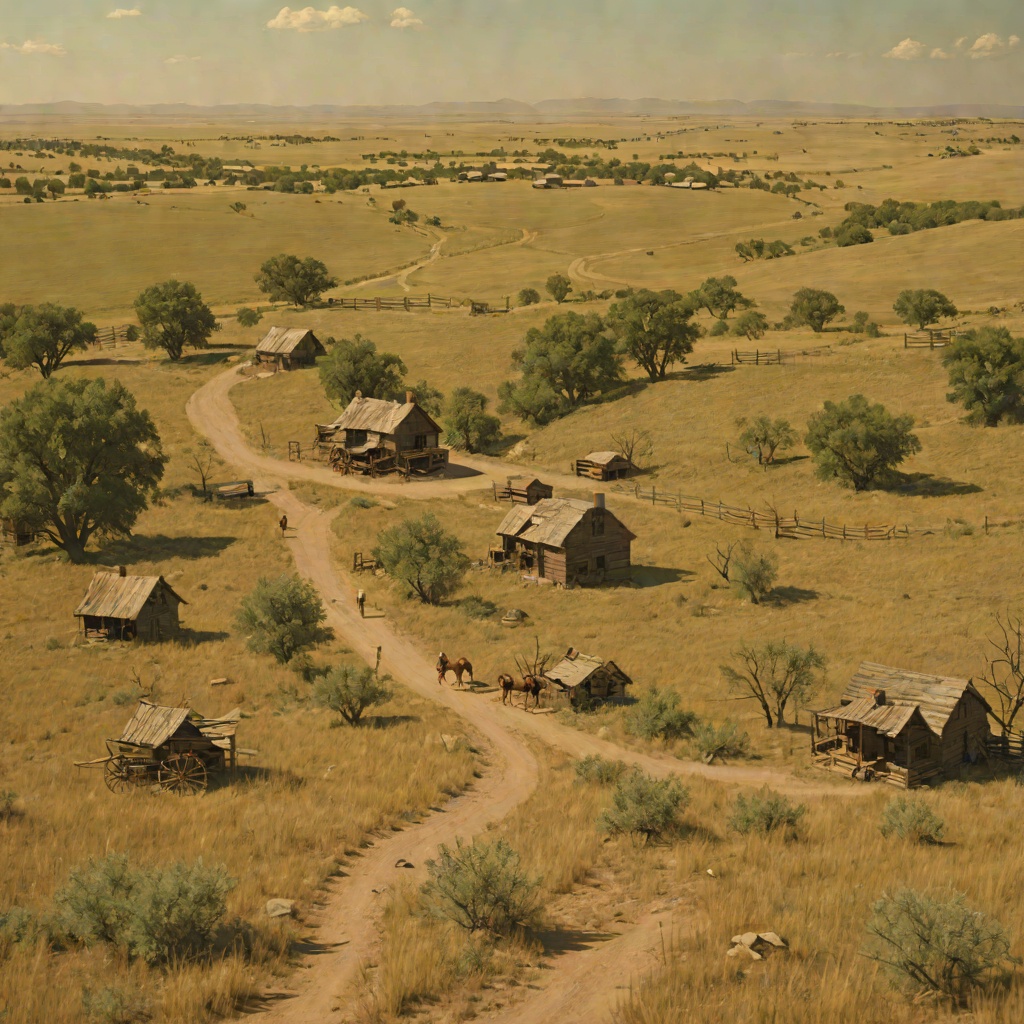
Little House on the PrairieThe little house is the log cabin that Charles Ingalls builds by hand on the High Prairie in Indian Territory, the physical and emotional center of the family's year on the frontier. It represents the American Dream of self-sufficient land ownership, yet its construction, completion, and final abandonment trace the arc of the Ingalls family's brief settlement and their forced departure when the U.S. government orders white settlers out of Indian Territory. From the moment Pa stops the wagon and declares, "Here we are, Caroline! We'll build our house right here," to the morning the family drives away from it forever, the house is the fixed point around which the family's hopes, labors, and fears revolve.
Building the House
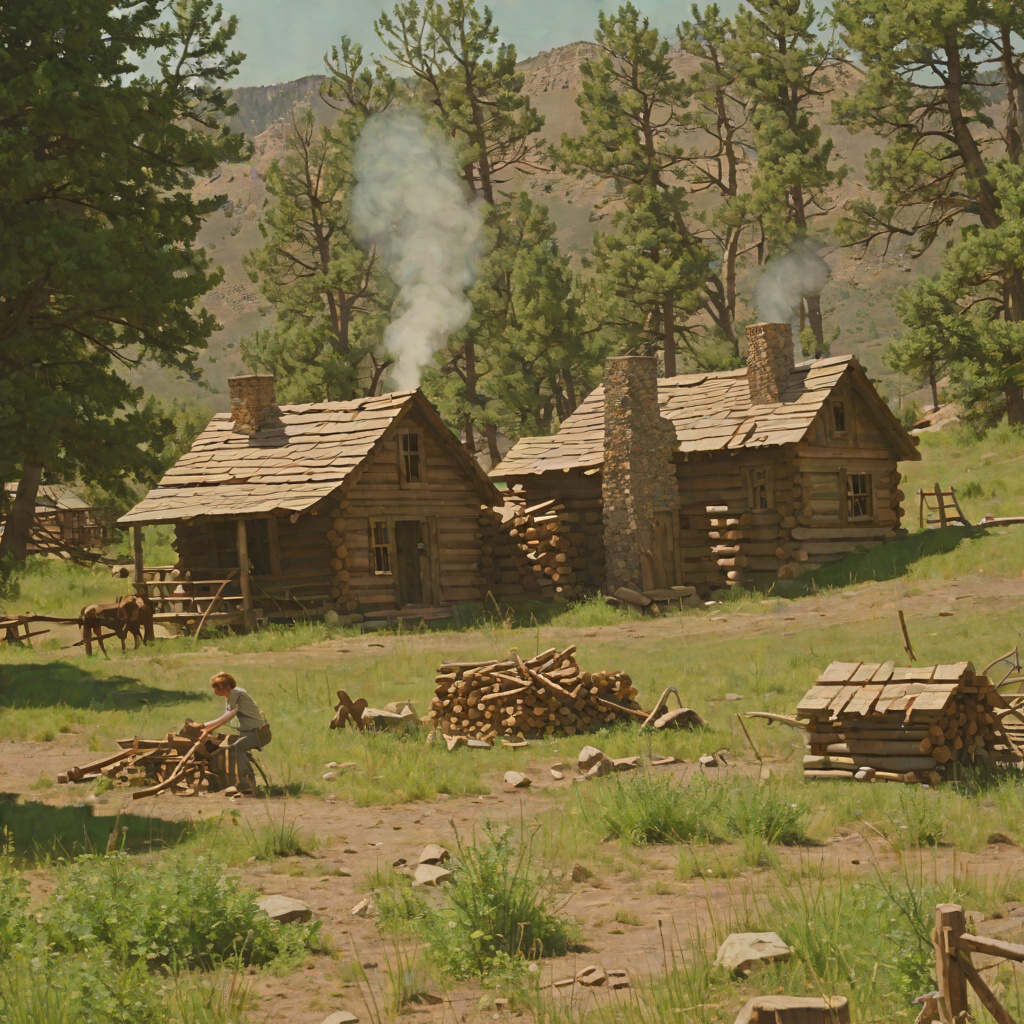
The house rises from the bare prairie through Pa's solitary labor. Day after day he drives to the creek for logs, then measures the shape of the house on the ground by walking from side to side and front to back. He digs shallow trenches along two sides and rolls two big logs into them, then lays two strong logs across the first two to make a square. With his axe he cuts a deep wide notch near the end of each log so that the four logs fit together at these cuts, forming a foundation strong enough to hold up the new house. All by himself Pa builds the walls three logs high before Ma joins him, and together they raise the walls log by log while Laura plays in the tall grass. The work is not without danger: one day a big log falls toward Ma, and Pa shouts, "Caroline, be careful! Get out of the way!" but cannot stop it, and the log crashes down, knocking Ma to the ground.
Completion and Domestic Life
The house is finished through cooperation and neighborly help. Mr Edwards, a tall man in old clothes who is very polite to Ma, arrives early one morning and proves a fast worker; in one day he and Pa finish the walls, laughing and singing while their axes make the wood fly. They cut holes for a door and two windows, leaving only the roof and floor unfinished. Laura runs inside the new house and finds it smells sweetly of cut wood and prairie grass, with the sun shining through the window holes across her hands, arms, and feet; the walls are thick and the house feels large and strong. By dinner time the house is ready: beds are made on the floor, short logs have become chairs, and Pa's gun hangs in its place over the door. Pa puts a quilt over the door hole, and as Laura falls asleep that night she hears a wolf's cry from far away on the prairie but does not feel so frightened. Pa promises, "Before winter comes I'll make a wood floor and a solid roof," and he keeps his word: he takes the canvas off the top, carries logs from the creeks, cuts them into long thin boards, and nails them across the rafters all the way to the top so that rain will never get in, then makes a floor with beautiful hard wood. Later, with Mr Scott's help, Pa digs a well so the family no longer needs to fetch muddy water from the creek, and he goes to town to get glass for the windows, making the house truly finished. The family celebrates by eating in their house for the first time, with Ma cooking a prairie chicken in the new fireplace she built with Pa, and Laura sits up straight on her log chair, using her knife and fork nicely as Ma taught her, feeling happy to be in a house again.
The House as Sanctuary and Stage
The little house becomes the family's refuge through a series of frontier dangers. When wolves surround the cabin, a wolf howls right in Laura's ear from just the other side of the wall, and Pa stands with his gun while Laura gets out of bed to see them. During the malaria outbreak, Pa and Ma put the girls to bed in the middle of the day, and Laura drifts in and out of consciousness, hearing voices but no words, feeling cold as ice and then burning, while Pa and Ma themselves fall sick. When the prairie fire roars toward the house, Pa digs a trench and sets a small backfire while Ma follows with a wet sack, beating at the flames when they cross to her side; Mary and Laura stand against the house holding hands and trembling, Baby Carrie inside, Jack howling, and the orange and yellow flames coming faster than horses can run. During the Indian war-cry crisis, the house becomes a prison of fear: the family cannot go out, Pa watches at the window with his gun, Laura and Mary stay close to Ma, poor little Carrie cries, and Jack growls all night long. Pa grows so exhausted that one day his head falls onto the table and he sleeps a little, waking with a jump and saying crossly to Ma, "Don't let me do that again!" The silent days are worse than the nights, with the animals staying in the stable and the family confined indoors.
Abandonment and the American Dream
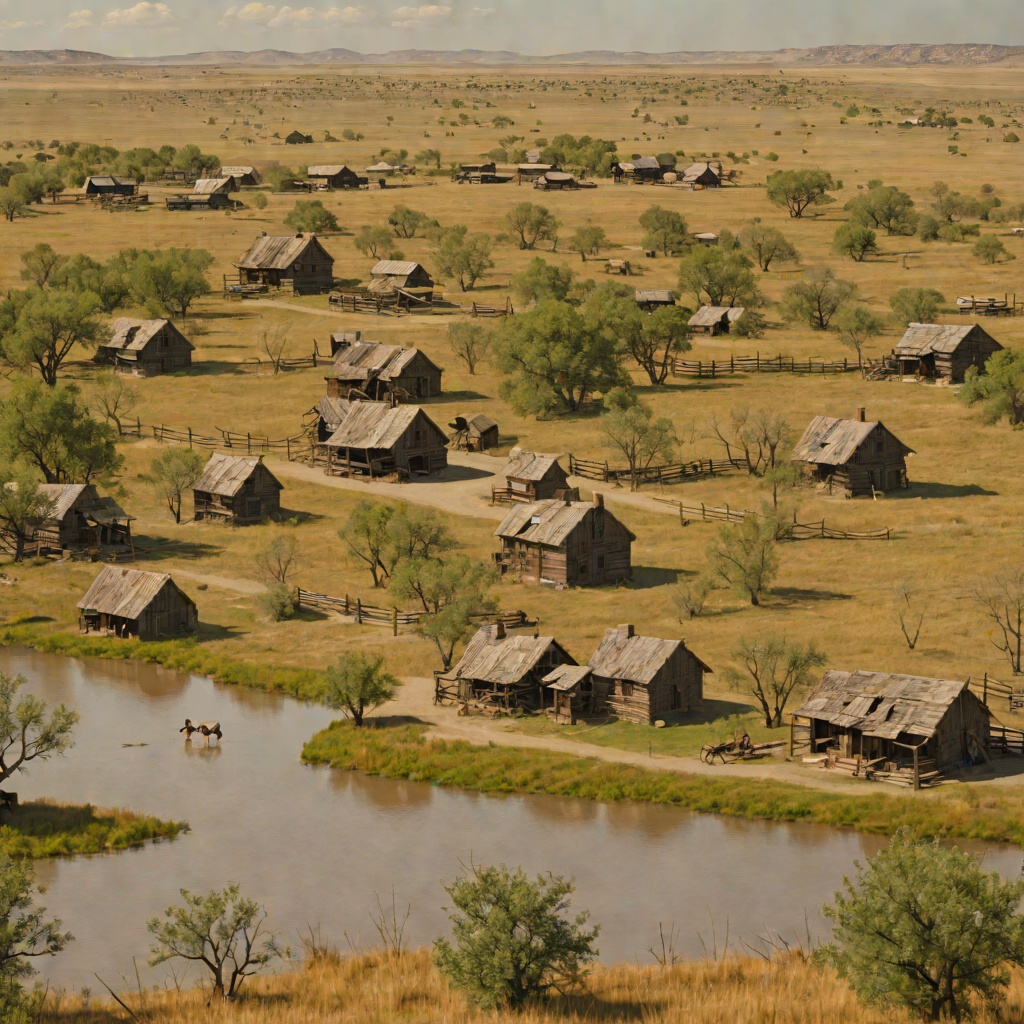
The house's fate is sealed by politics rather than by the dangers of the prairie. Pa brings home a plough and seeds, promising Ma, "when these seeds grow in this rich land of ours, we'll be living like kings!" But he also reports that people in Independence say the government is going to move the white settlers out of Indian Territory. When Mr Edwards and Mr Scott confirm that soldiers are coming, Pa refuses to wait: "I won't stay here until the soldiers take me away like a criminal. The government in Washington told us it was all right to build our houses here. But if now they want us to go, we'll go. We won't wait for the soldiers to make us leave. We're going now!" The family packs the wagon, leaving behind the plough, the only thing they cannot take. Before they leave, Pa opens the back of the wagon cover so Mary and Laura can look out at their little log house one last time, and then Pet and Patty walk away from it. Ma says sadly, "A year gone, Charles," but Pa answers with a smile, "What's a year? We have all the time in the world." As they drive away, Pa observes, "It's a great country, Caroline. But there will be wild Indians and wolves here for many years." The house, built with such care and hope, is left standing empty on the prairie, a monument to the American Dream that the government itself revokes.